
 Apply to the lab
 Building a symbiotic loop between computing interfaces and human abilities
Computing is becoming increasingly generative and personal, yet most systems still communicate through pixels. The human nervous system offers a more direct and expressive design space for interaction.
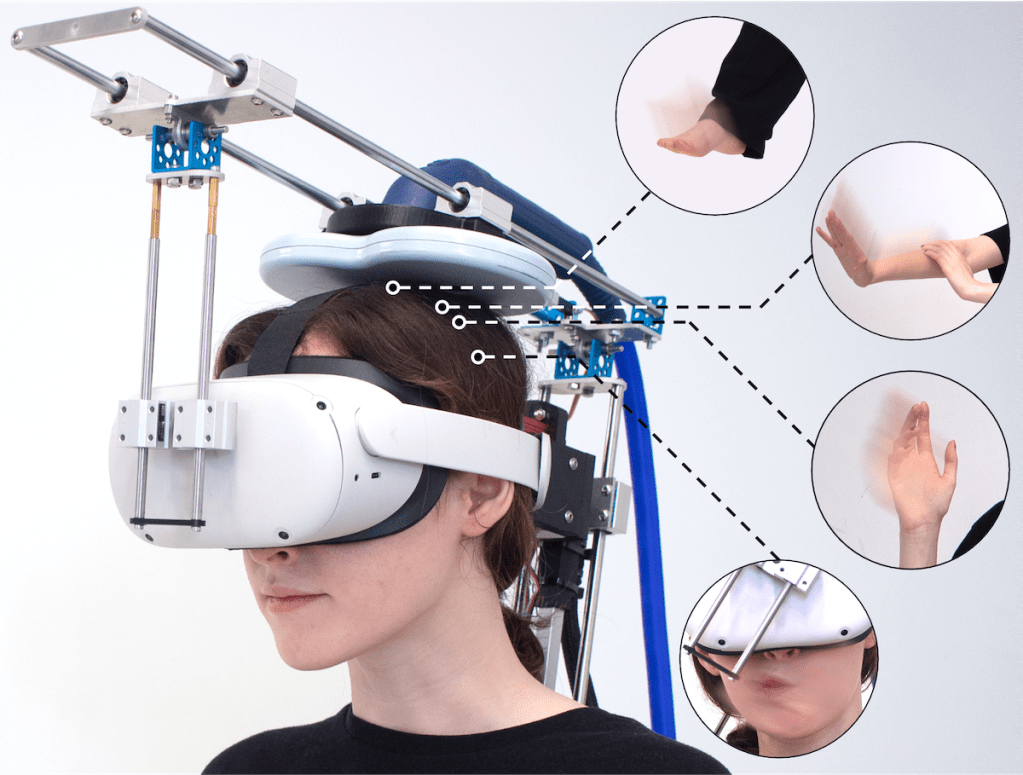
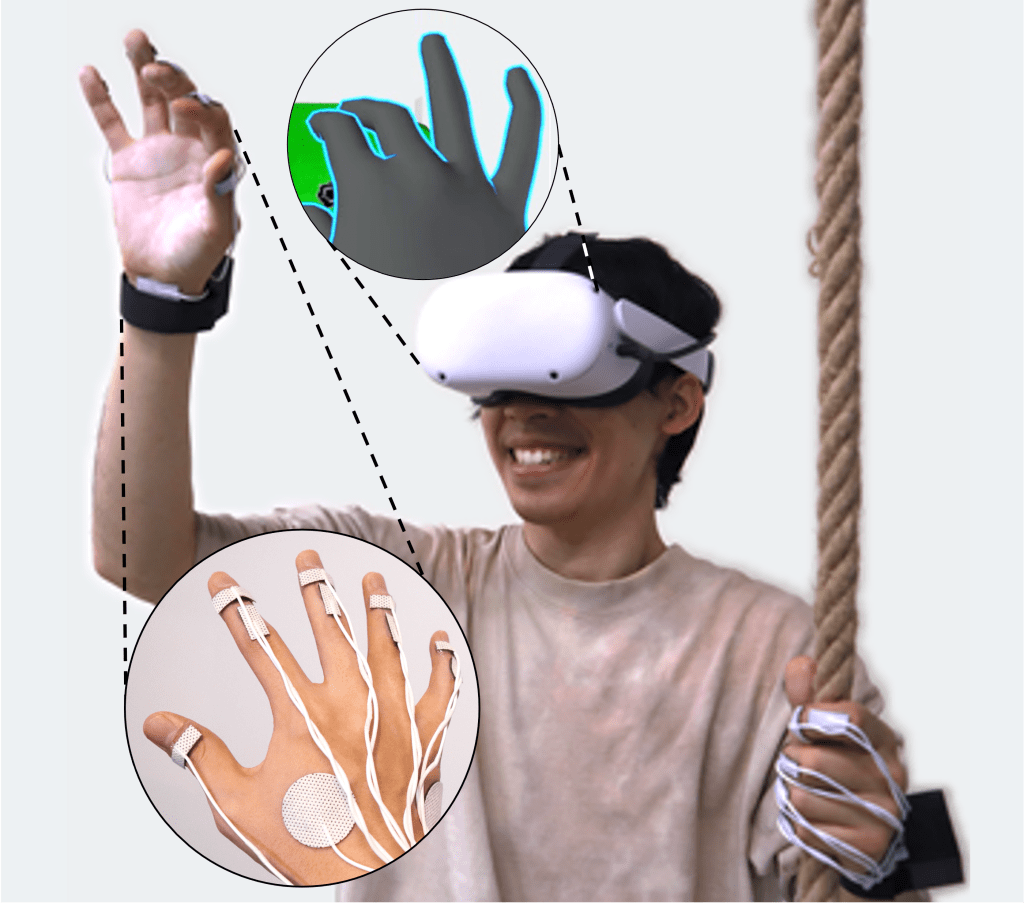
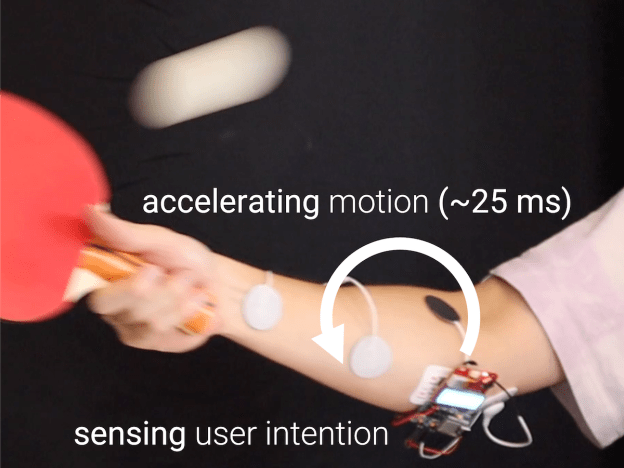
We are an interdisciplinary human–computer interaction (HCI) research group based in the Department of Computer Science at UT Austin. We build computing interfaces that form a symbiotic loop with people by closely coupling technology with the human neural processes underlying sensation, perception, cognition, and action. These interfaces include dexterous tactile feedback without obstructing the palm (video); faster voluntary actions through muscle sensing and stimulation (video); and full-body sensory feedback through non-invasive brain stimulation (video).
We pursue this vision through electronic and mechanical systems design, signal processing, machine learning, interaction design, and psychophysical methods. Grounded in HCI, our research spans related areas including haptics, somatosensory neuroscience, cognitive science, and robotics.
Team


News
Three papers accepted to CHI 2026
Action acceleration · embodied input · wearable haptics
Yudai named a 2025 Google PhD Fellow
Human-computer interaction
Yudai selected as a Siebel Scholar
Class of 2026
Two papers accepted to UIST 2025
Primed Action · Vestibular Hand Redirection
Research
2026
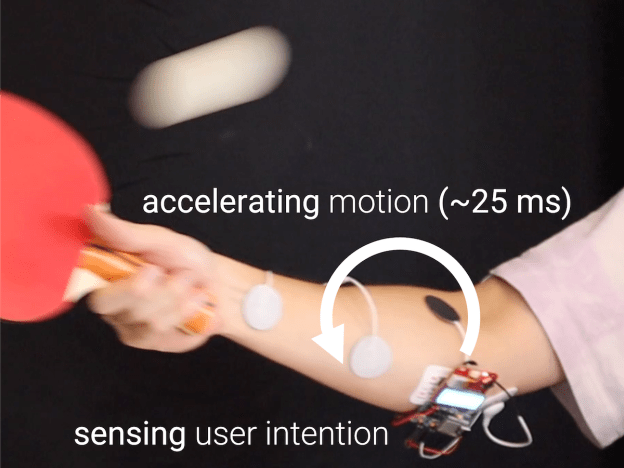
Myo Action: Accelerating Voluntary Actions via Electromyography and Muscle Stimulation
Myo Action detects the earliest muscle activity before visible movement begins, then uses electrical muscle stimulation to accelerate the action the user already intended. The system shortens reaction time while preserving voluntary control.
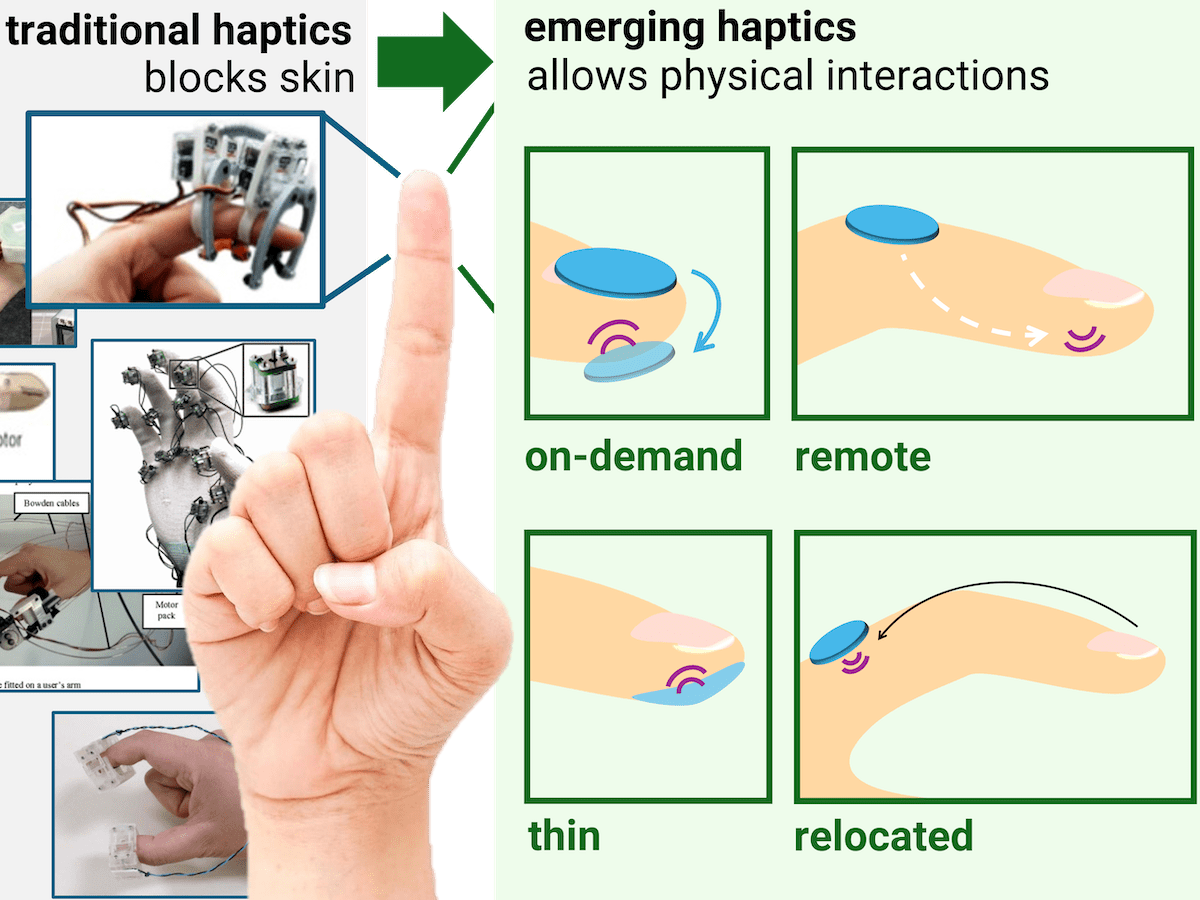
Next Generation Wearable Haptics Should Balance Virtual and Real-world Fidelity
This review argues that wearable haptics should be evaluated by two forms of fidelity: how convincingly a device renders virtual touch and how little it interferes with real-world touch. It organizes existing approaches into feel-through, on-demand, relocated, and remote actuators, then outlines design tradeoffs for systems that move seamlessly between virtual and physical tasks.
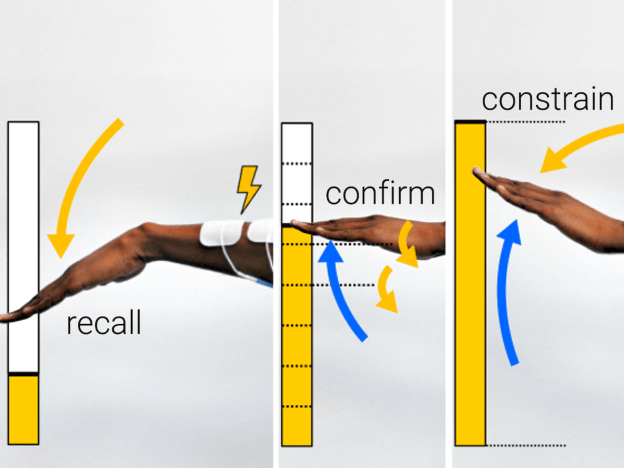
Increasing Input Accuracy of Embodied Devices via Muscle Stimulation
This work uses electrical muscle stimulation to physically guide input on embodied devices. By helping the body reach the intended target, the technique improves accuracy while allowing the user to remain actively involved in the movement.
2025
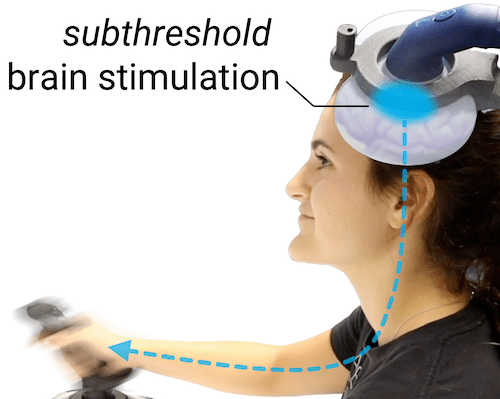
Primed Action: Preserving Agency while Accelerating Reaction Time via Subthreshold Brain Stimulation
Primed Action explores whether imperceptible brain stimulation can prepare the motor system before a response is needed. The stimulation accelerates reaction while the user still decides whether and when to act.
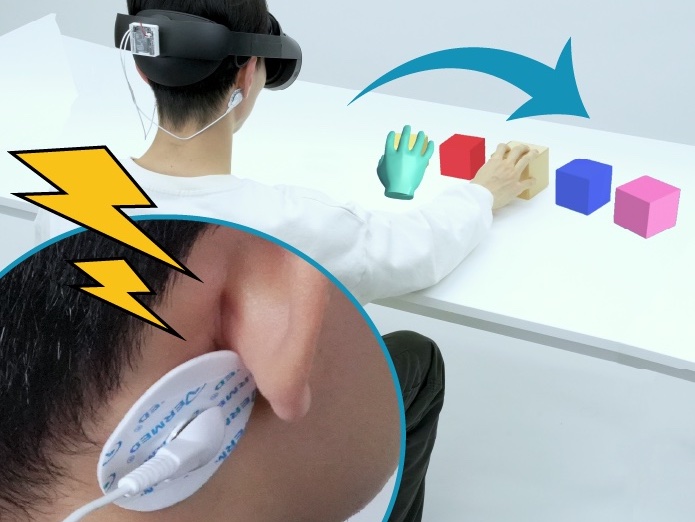
Vestibular Stimulation Enhances Hand Redirection
We stimulate the vestibular system to subtly alter how users perceive their own motion. In virtual reality, this expands hand redirection and allows a smaller physical movement to support a larger virtual interaction.
2024
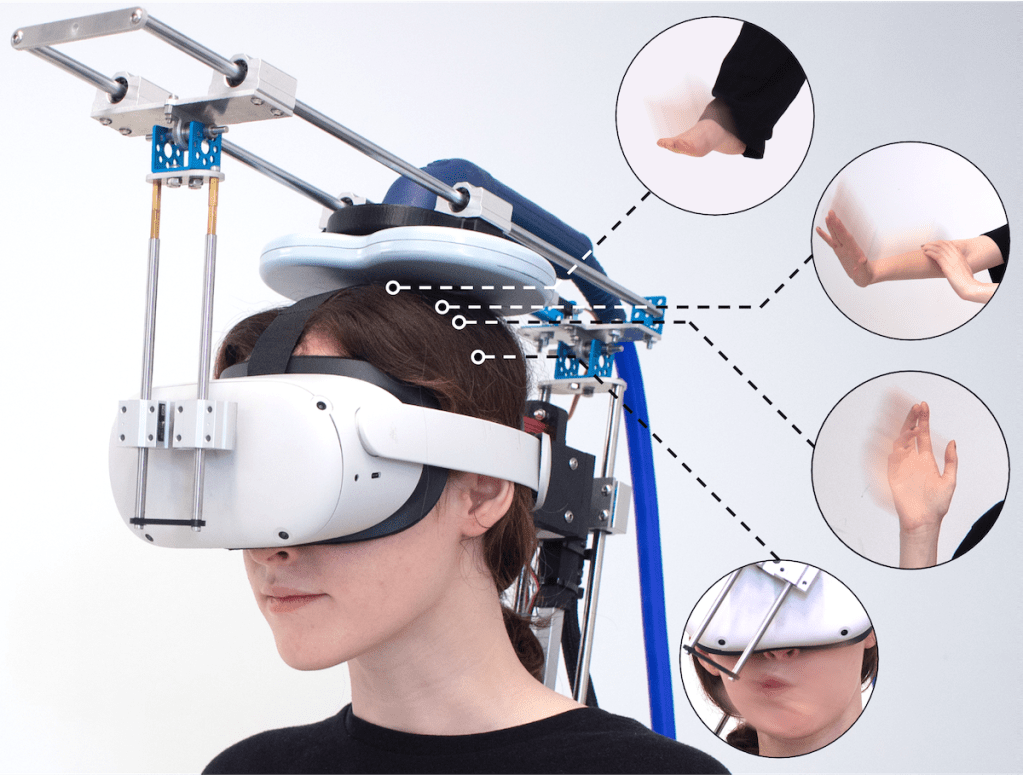
Haptic Source-Effector: Full-Body Haptics via Non-Invasive Brain Stimulation
Haptic Source-Effector produces touch sensations across the body using non-invasive stimulation of the brain rather than actuators placed at every output location. The work investigates a new path toward lightweight, spatially flexible haptics.
Best Paper Honorable Mention · Best Demo Honorable Mention
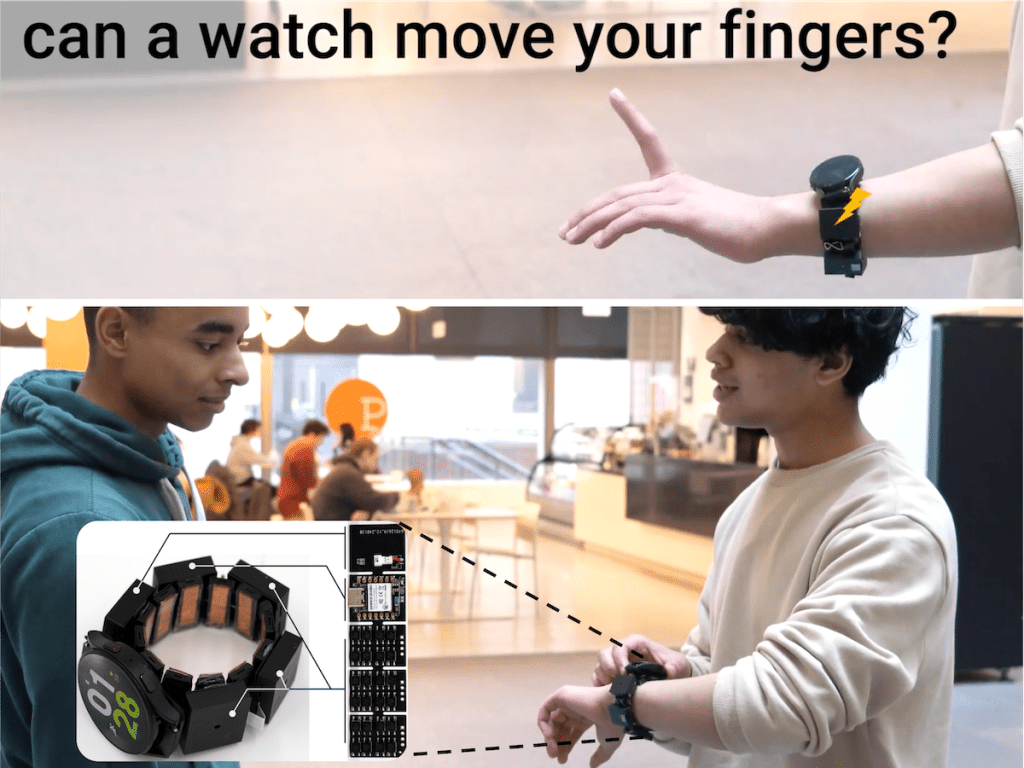
Can a Smartwatch Move Your Fingers? Compact and Practical Electrical Muscle Stimulation in a Smartwatch
This project integrates practical electrical muscle stimulation into a smartwatch-sized form factor. The device can move individual fingers while remaining compact enough to resemble an everyday wearable.
Best Paper Honorable Mention · top 2%
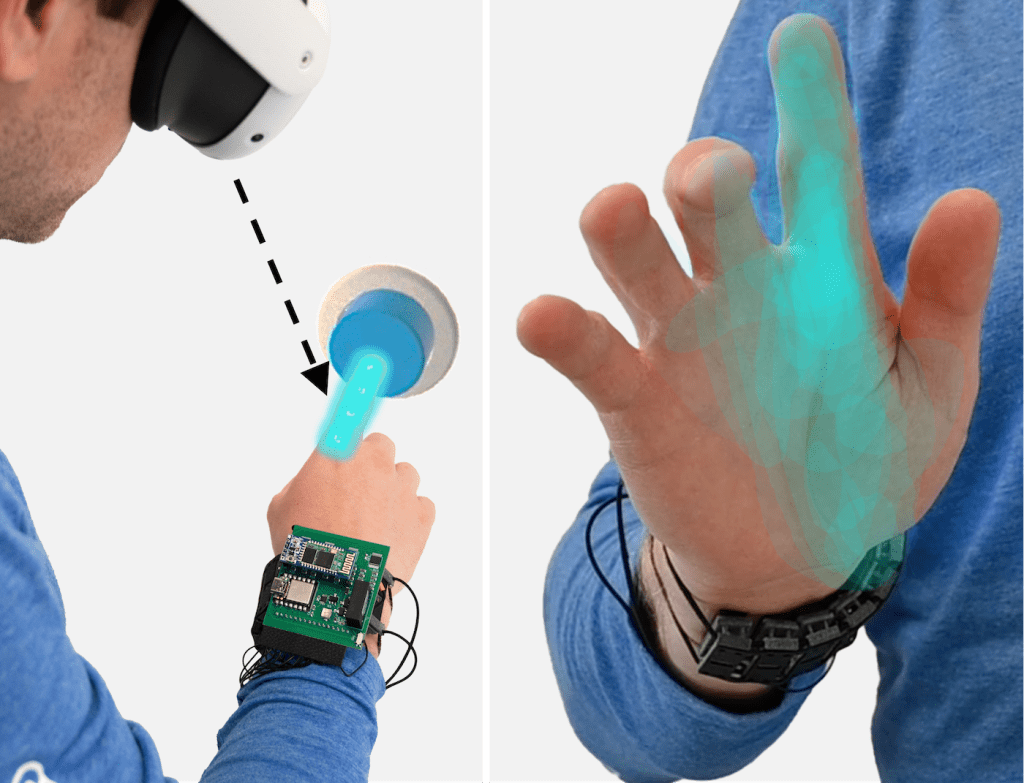
ReaWristic: Remote Touch Sensation to Fingers from a Wristband via Visually Augmented Electro-Tactile Feedback
ReaWristic delivers electro-tactile feedback at the wrist and visually redirects the sensation toward individual fingers. This approach creates finger-specific touch experiences without placing hardware on the hand.
2023
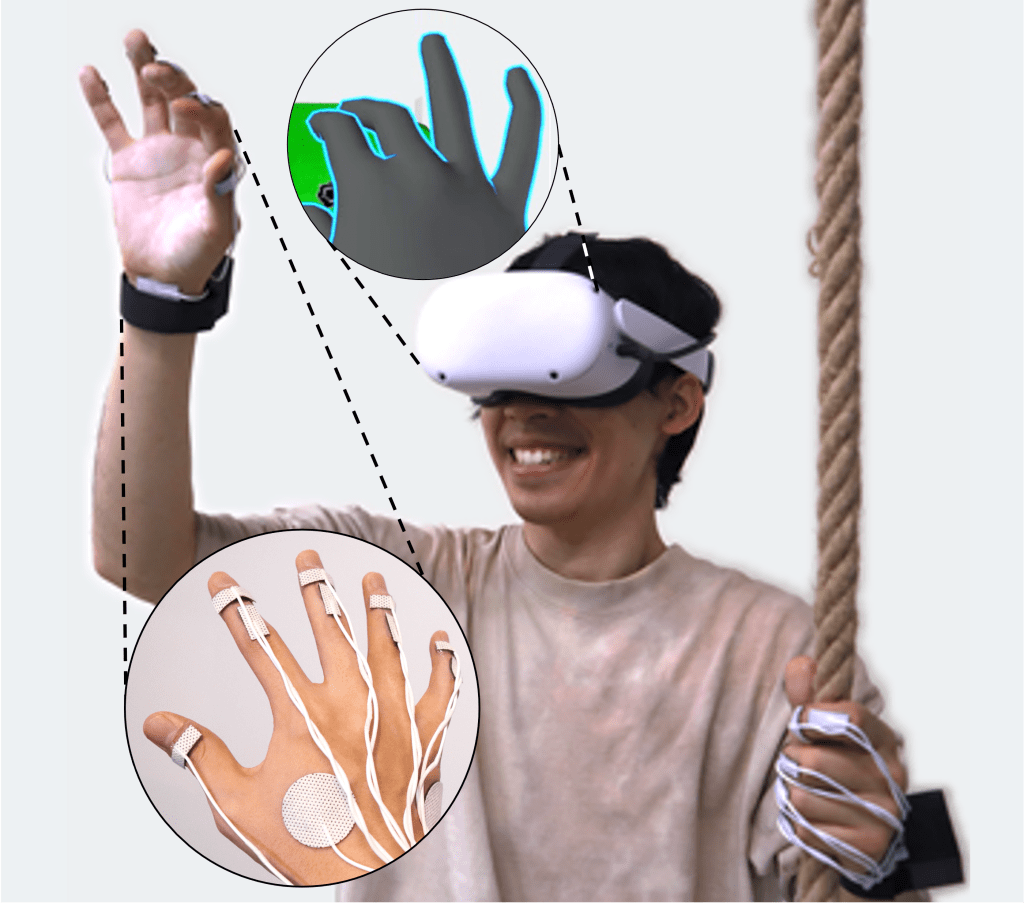
Full-Hand Electro-Tactile Feedback without Obstructing Palmar Side of Hand
This wearable system creates tactile sensations across the full hand using electrodes placed away from the palm. Users can still grasp objects and touch surfaces naturally while receiving spatial feedback.
Best Paper · top 1%
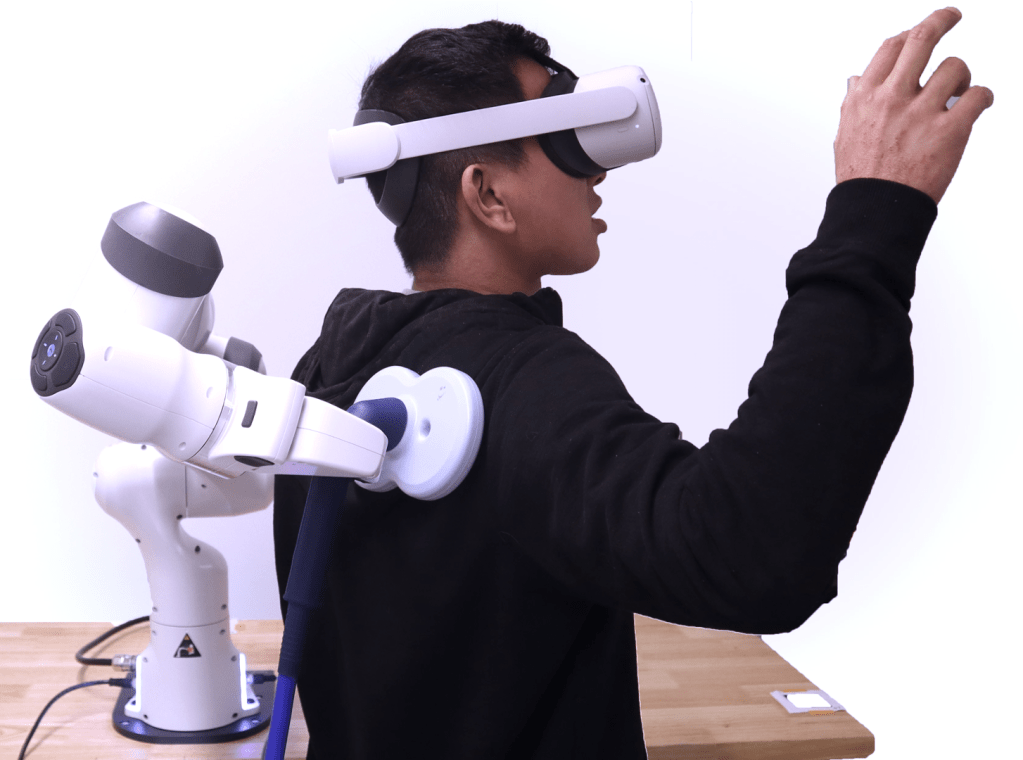
Interactive Benefits from Switching Electrical to Magnetic Muscle Stimulation
We compare electrical and magnetic approaches to muscle stimulation as tools for interaction. Magnetic stimulation enables contact-free actuation through clothing and suggests new ways to make body-based interfaces easier to wear.
2022
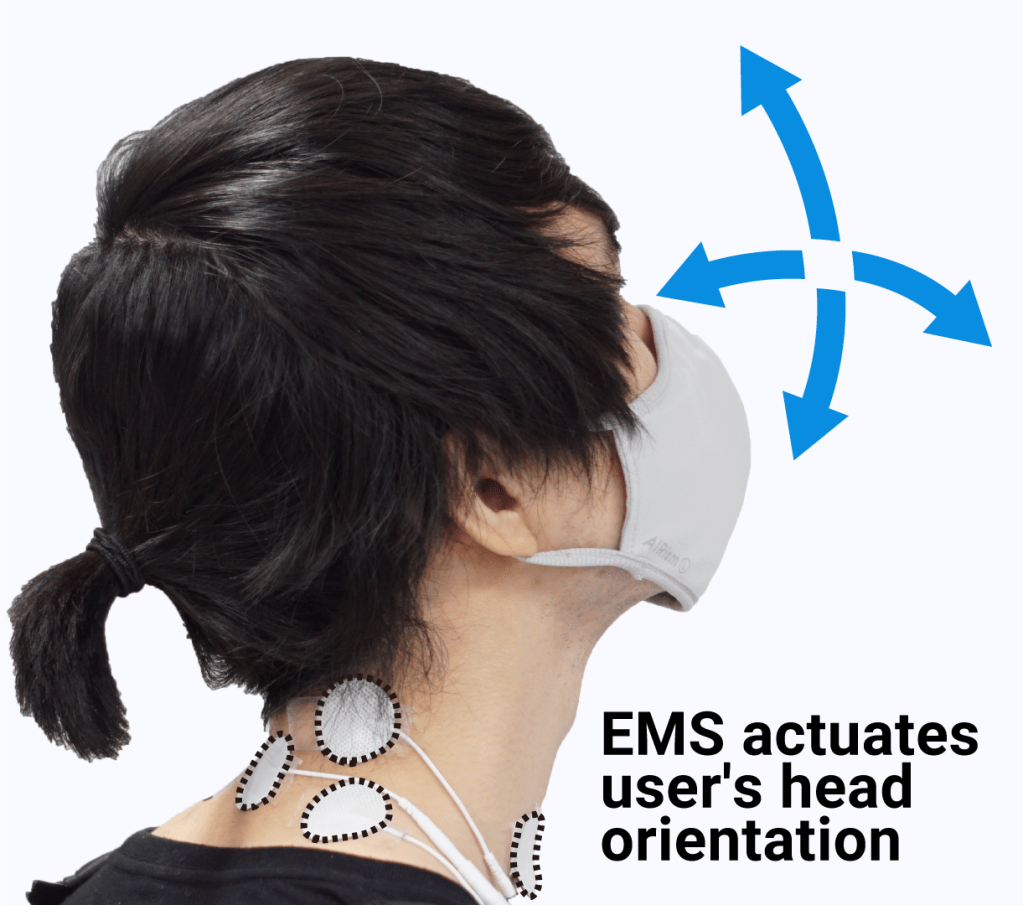
Electrical Head Actuation: Enabling Interactive Systems to Directly Manipulate Head Orientation
Electrical Head Actuation uses muscle stimulation to turn a user’s head toward interactive targets. The project examines direct physical guidance for attention, training, and immersive experiences.
Best Demo
We are recruiting PhD students, postdoctoral researchers, and collaborators interested in interdisciplinary HCI that connects computing with human sensation, perception, cognition, and action.
Submit the research interest form